



 GeelTech, Wakalat Street, Amman

Artificial Intelligence and the Future of Humans: Opportunities, Challenges, and Impact is a practical guide that explains what AI is, why it matters, where it helps most, what risks it introduces, and how to adopt it responsibly with clear governance and human oversight.
What you’ll learn in this guide
-
The foundations of AI (ML, deep learning, NLP, robotics)
-
Where AI creates real opportunities for people and economies
-
The main risks: jobs, privacy, bias, control, and safety
-
Ethical and social considerations you should plan for
-
A responsible AI adoption checklist
-
FAQs
What is AI (in simple terms)?
Artificial intelligence is a field of computing where systems perform tasks that typically require human intelligence—such as recognizing patterns, understanding language, making predictions, and generating content. Most practical AI today is data-driven: it learns from examples and improves over time.
Why AI matters for the future of humans
AI is changing how work gets done, how decisions are made, and how new products are built. Its impact is not just technical—it’s economic, social, and ethical. The “future of humans with AI” depends on whether AI is used to augment people (support better work and better services) or to replace human judgment in sensitive areas without safeguards.
Foundations of AI (the building blocks)
Machine Learning (ML)
Machine learning helps systems learn patterns from data to perform tasks without being explicitly programmed for every rule.
Main types
-
Supervised learning: learns from labeled examples (e.g., “spam” vs “not spam”)
-
Unsupervised learning: finds patterns in unlabeled data (e.g., clustering customers)
Deep Learning
A subfield of ML using neural networks. It’s widely used for complex tasks like image recognition, speech recognition, and advanced language systems.
Natural Language Processing (NLP)
NLP helps AI understand and generate human language. It powers tools such as chatbots, translation, summarization, and sentiment analysis.
Knowledge representation and reasoning
Methods for storing structured knowledge (facts, rules) and using logic to draw conclusions—useful for decision support and expert systems.
Robotics
AI enables robots to perceive environments, plan actions, and perform tasks—often used in manufacturing, warehouses, and hazardous environments.
Opportunities: where AI can improve human life
Productivity and efficiency
AI can automate repetitive tasks and reduce manual work, which can free humans for higher-value work—if organizations redesign roles responsibly.
Examples:
-
Automating data entry and document processing
-
Support ticket triage and faster resolution workflows
-
Smarter scheduling and resource planning
Better decision-making
AI can identify patterns that humans may miss, improving planning and risk management.
Examples:
-
Forecasting demand and optimizing inventory
-
Predicting churn and improving retention strategies
-
Detecting anomalies in security logs or transactions
Scientific and medical advancement
AI can accelerate research by analyzing large datasets and discovering patterns faster.
Examples:
-
Assisting medical imaging analysis (with clinical oversight)
-
Accelerating research workflows (drug and materials research)
Personalization in education and services
AI can tailor content and experiences based on user needs.
Examples:
-
Personalized learning pathways
-
Adaptive customer experiences and recommendations
Challenges and risks (what humans must address)
Job displacement and the future of work
Automation can reduce roles with repetitive tasks. The key risk is not “AI replaces all jobs,” but that some jobs change faster than workers can transition.
Practical mitigation:
-
Reskilling programs
-
New roles in quality control, exception handling, AI operations
-
Policies that support transitions
Bias, fairness, and discrimination
If training data reflects bias, AI outputs can reinforce it—especially in hiring, lending, or policing-style decisions.
Mitigation:
-
Diverse and audited datasets
-
Bias testing and monitoring
-
Human review for high-stakes decisions
-
Transparent decision logs
Privacy and data security
AI often depends on data. Collecting and storing large datasets increases risk.
Mitigation:
-
Data minimization (collect only what you need)
-
Encryption and access control
-
Retention policies and consent mechanisms
-
Security reviews for AI vendors and integrations
Control, autonomy, and accountability
As AI becomes more powerful, the question becomes: who is responsible when AI makes mistakes?
Mitigation:
-
Clear governance and accountability
-
Human-in-the-loop controls
-
Auditable systems and explainability where possible
-
Rules for what AI can/cannot decide
Transparency (“black box” risk)
Some AI models are hard to interpret. This can reduce trust and make failures harder to diagnose.
Mitigation:
-
Prefer interpretable models for critical decisions
-
Require explanations and logs
-
Independent testing and audits when needed
Responsible AI adoption checklist (practical steps)
Step 1: Choose one use case with a metric
-
Pick one workflow (support, documents, forecasting, security alerts)
-
Define a measurable KPI (time saved, error reduction, conversion uplift)
Step 2: Assess data readiness and legal boundaries
-
Identify data sources and quality
-
Define privacy boundaries and permissions
-
Document what data is used and why
Step 3: Select the right approach
-
Rules automation (simple and controlled)
-
ML models (pattern-based prediction)
-
NLP/LLM assistants (language tasks: summaries, support, search)
-
Hybrid (rules + AI) for better control
Step 4: Build a pilot with guardrails
-
Limit scope and users
-
Add human review for sensitive actions
-
Compare baseline vs pilot metrics
Step 5: Add governance and monitoring
-
Access controls and audit logs
-
Ongoing bias testing (when relevant)
-
Monitoring for drift, quality, uptime, and latency
-
Feedback loop for corrections
Step 6: Scale responsibly
-
Expand only what proves measurable value
-
Document lessons learned and standardize policies
FAQ
Will AI replace humans?
AI will change many roles. In many sectors, the highest value comes from human + AI collaboration: AI handles repetitive work and pattern detection, humans handle judgment, accountability, and empathy.
What is a safe first AI project?
Support triage, document extraction, and reporting summaries are often lower-risk and easier to measure than automating high-stakes decisions.
How do we reduce bias in AI?
Use better datasets, test outputs, keep human review in sensitive workflows, and maintain audit logs.
How can we protect privacy?
Limit data collection, secure it, define retention policies, and ensure transparency about data use.
Conclusion
AI can be a powerful tool for human progress—improving productivity, enabling scientific breakthroughs, and enhancing services. But it also introduces real risks related to jobs, bias, privacy, and control. The most reliable path forward is responsible adoption: start with measurable use cases, build pilots with guardrails, keep humans accountable for outcomes, and use governance and monitoring to ensure AI benefits people rather than harms them.
Explore our services: Mobile App Development • Website Design & Development • Custom Software Development
Our News
Yalla Tahadi App: A Unique Jordanian Experience of Fun and Brain Challenges
20.May.2025
Accounting & Auditing Website Guide in Jordan: What Your Firm Needs to Win Trust & Leads
14.Apr.2025
Travel & Tourism Booking Website Guide (Jordan): What You Actually Need to Get Bookings
14.Apr.2025
Construction Company Website Guide in Jordan: What to Include to Win More Projects
13.Apr.2025
Training Center & Private School Website Guide in Jordan: What to Include for Trust and Enrollments
13.Apr.2025
Engineering Office Website Guide in Jordan: What to Include for Trust and Project Leads
13.Apr.2025
Beauty Salon Website Guide in Jordan: What to Include for Bookings and Trust
13.Apr.2025
Lawyer Website Guide in Jordan & GCC: What to Include for Trust and Consultations
11.Apr.2025
Geel Tech’s Methodology for Managing Large-Scale Tech Projects in Jordan & GCC
05.Apr.2025
How to Choose a Domain + Set Up Professional Email in Jordan
20.Mar.2025
How to Create a Google Business Profile in Jordan: A Step-by-Step Guide for Better Visibility
20.Mar.2025
Payment Gateway Selection Guide in Jordan & GCC: Requirements, Fees, and Integration Steps
19.Mar.2025
Geel Tech Prepares for Expansion into Saudi Arabia: A Strategic Step Towards a Tech-Driven Future
17.Mar.2025
The Future of Jobs: Which Roles Are Changing Fast and How to Adapt
15.Mar.2025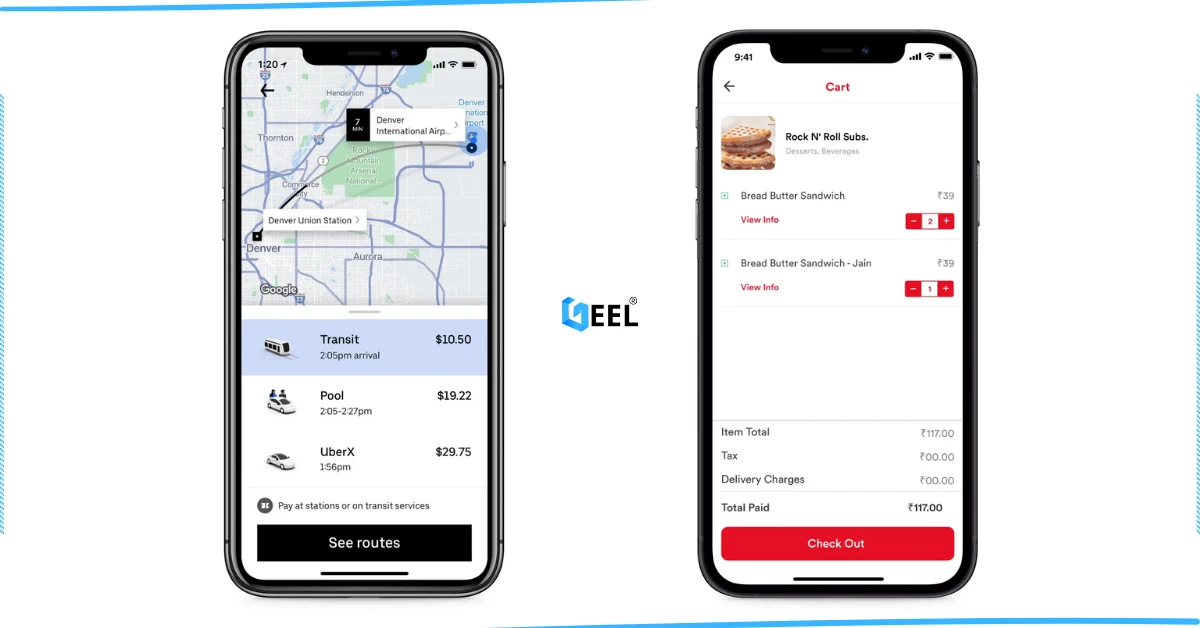
How to Create an App Similar to Uber or Talabat: A Practical Guide
01.Mar.2025
AI Use Cases for Jordanian Businesses (Automation, Analytics, Security) + Implementation Checklist
27.Feb.2025
Programming for Beginners in Jordan: A Comprehensive Guide to Roadmaps, Careers, and Future-Proof Benefits
04.Nov.2024
PHP Development in Jordan & GCC: Why It Still Powers Modern Websites and Business Systems
04.Nov.2024
Network Security and Compliance Solutions: A Practical Guide for Jordan & GCC Businesses
04.Nov.2024
How to Create a Restaurant Ordering System in Jordan & GCC (QR Menu + Online Payments)
04.Nov.2024
3 Types of Customer Relationship Management Software in Jordan & GCC
04.Nov.2024
Benefits of ERP Solutions in Jordan & GCC: A Practical Guide
04.Nov.2024
Wireless Network Infrastructure Specialist: Positions and Obligations
04.Nov.2024
Mobile App Developers in Jordan: What They Do and How to Work With Them
03.Nov.2024
How AI Is Transforming the World: A Practical Guide
25.Sep.2024
3 Ways Artificial Intelligence Is Already Changing the World
25.Sep.2024
How to Create a Website for Free (and When It Stops Being Free)
25.Sep.2024
Mobile Development in Jordan & GCC: Ecosystem, Telecom Evolution, and App Launch Checklist
25.Sep.2024
Computer Science Technology: Definition, Key Fields, and Real-World Uses
25.Sep.2024
Computer Systems Analyst: Role, Skills, and Deliverables
25.Sep.2024
Computer Information Systems Administration (MIS): Practical Guide in Jordan & GCC
25.Sep.2024
Design of Gaming Applications: A Practical Guide in Jordan & GCC
17.Sep.2024
Educational Electronic Game Design: A Practical Guide in Jordan & GCC
05.Sep.2024
Mobile App Development Roadmap 2026: 9-Step Plan to Build and Launch an App
05.Sep.2024
Best Programming Language for E-commerce Websites (2026 Guide)
05.Sep.2024
Website Redesign Examples: What Changes and Why It Works
05.Sep.2024
Mobile-Friendly Website Design: SEO Impact, and Best Practices
28.Aug.2024
Custom Mobile App Development in Jordan & GCC: Business Benefits Checklist
27.Aug.2024
What Leading Mobile App Development Companies Aim to Achieve
24.Aug.2024
The 5 Most Important Processes Performed by Mobile App Development Experts
11.Aug.2024